
German local authorities are opposing the possible construction of two nuclear power plants in the Eemshaven, just across the border in Groningen. Border municipalities and the state of Lower Saxony are rejecting the plans.
The mayor of the border town Emden, Tim Kruithoff, told the German broadcaster NDR: “We are a model region for renewable energy, and precisely there they want to build a nuclear plant.”
The mayor of the island of Borkum in the Wadden Sea, east of Rottumerplaat, is also very worried. He calls the plans unacceptable and has written a concerned letter to the Dutch House of Representatives. In the event of a nuclear accident, the entire island would have to be evacuated.
The Lower Saxony state government has already informed the Netherlands that it rejects the plans.
Demonstration
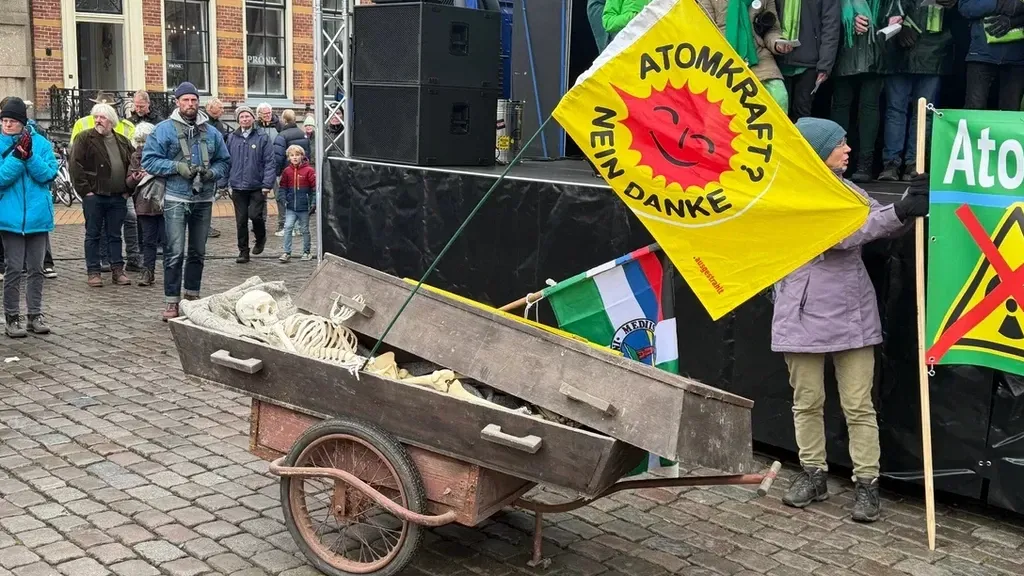
There is also strong resistance in Groningen to building nuclear plants in the Eemshaven. This afternoon a demonstration in the city of Groningen drew around three hundred people.
A German protest was present as well. Several demonstrators had traveled from Borkum to the mainland. They underscored their opposition with a skeleton in a coffin.
The cabinet announced this summer that three locations are under consideration for two new nuclear plants: two sites in the Eemshaven and one in Terneuzen in Zeeland. The cabinet bases this choice partly on an advisory report by grid operator TenneT, which says the Groningen port area is technically the best option.
Port operator Groningen Seaports concluded on Friday that the Eemshaven is not a logical location, because any nuclear plants could affect the local energy system and the security of electricity supply across the Netherlands.
There is little to no political support within Groningen for nuclear plants in the province. The cabinet keeps the option for Groningen open but has promised that Groningen will be ruled out if Zeeland proves to be equally suitable.
There is more support in Terneuzen, but there are major technical challenges there. TenneT expects significant bottlenecks in connecting to the high-voltage grid. The cabinet plans to make a final decision in early December.