
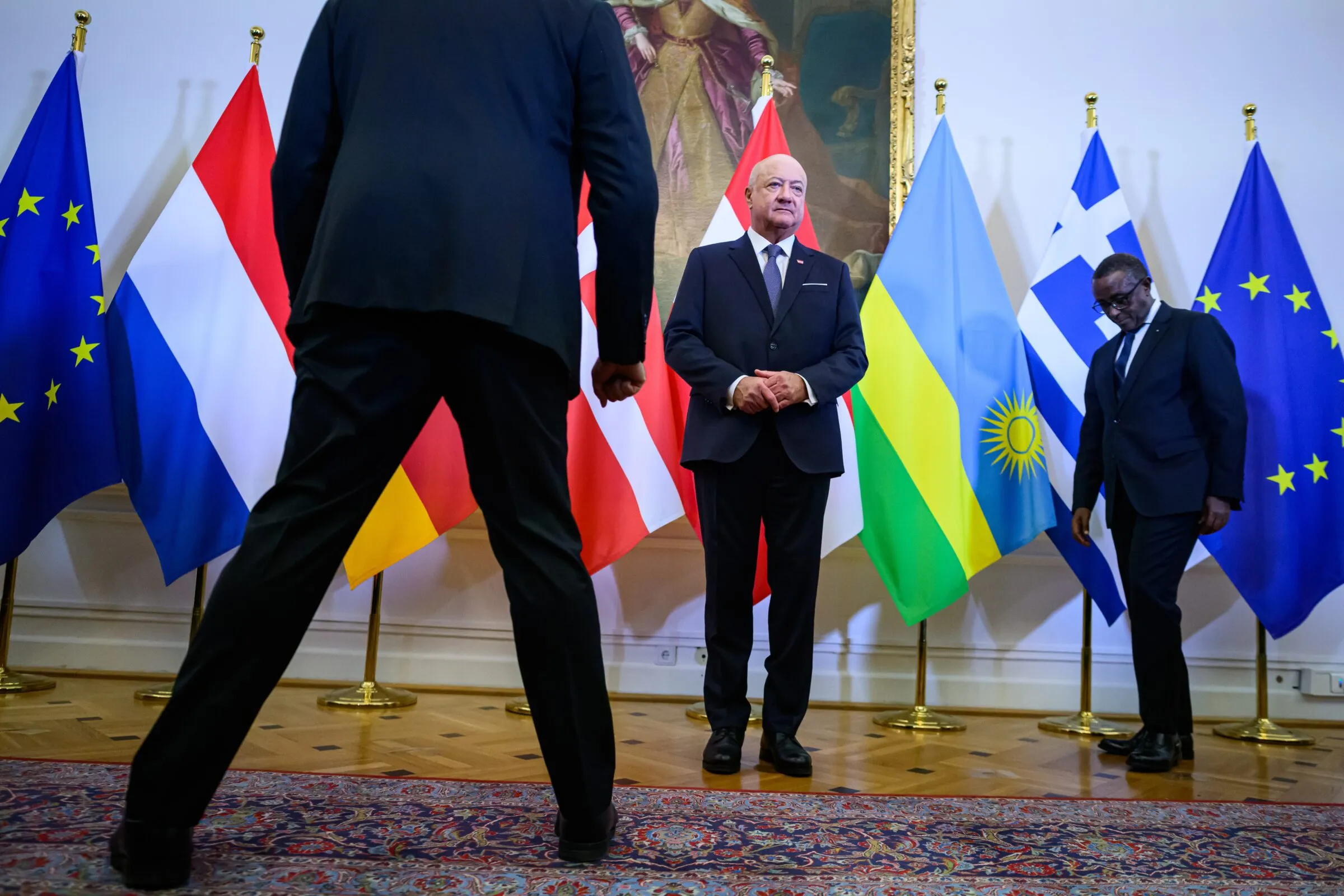
Rejected asylum seekers with deportation orders, possibly from as far away as Afghanistan, could be sent to Rwanda after five European countries announced talks with Kigali on Monday (16 November).
No formal deal has been signed, which raises questions about why Austria’s chancellor Christian Stocker and Denmark’s prime minister Mette Frederiksen, alongside ministers from Austria, Germany, Greece, the Netherlands and Rwanda’s interior minister Vincent Biruta, felt compelled to make a public announcement.
Instead the group met in Vienna, held a press conference and said a “partnership” had been agreed with Rwanda — while admitting that technical issues remain unresolved and a formal treaty is still to be negotiated in the coming months.
Read moreRwanda revealed as EU’s first migrant return hub, but what’s in it for Kigali?
The plan, officials said, is to begin deportations next year. Austria’s Stocker praised the move despite Rwanda’s controversial human rights record, which critics link to political repression and alleged ties to the M23 group in eastern DR Congo.
Even so, Stocker called the initiative a “truly historic paradigm”, noting Austria has deported more people than it has had asylum applications — a claim that seems designed to justify the tough new approach rather than answer concerns about transparency.
Frederiksen echoed those sentiments, saying a broad majority of European countries now back a more “sustainable” migration policy.
“We are now ready to move into more concrete steps,” she said, framing the plan as a deterrent to so‑called “illegal migration” and a message to would‑be migrants that Europe is not open to irregular entries.
Little detail
When pressed for specifics, officials would not disclose potential costs or many operational details.
Rwanda’s Biruta said those received in Rwanda would have options: return home voluntarily, move elsewhere, or integrate with legal residence and access to jobs.
He pointed to Rwanda’s experience working with the International Organisation for Migration (IOM), which has flown people from Libya to a Rwandan transit centre before resettlement elsewhere.
“We are sensitive to people who are seeking asylum. This is our main motivation,” he said, adding that monetary gain was not the aim amid assurances that people would not be placed in camps.
This article continues, but the full version is available only to EUobserver.com subscribers. Visit account.euobserver.com/membership